
Oakville: Diversity in the region
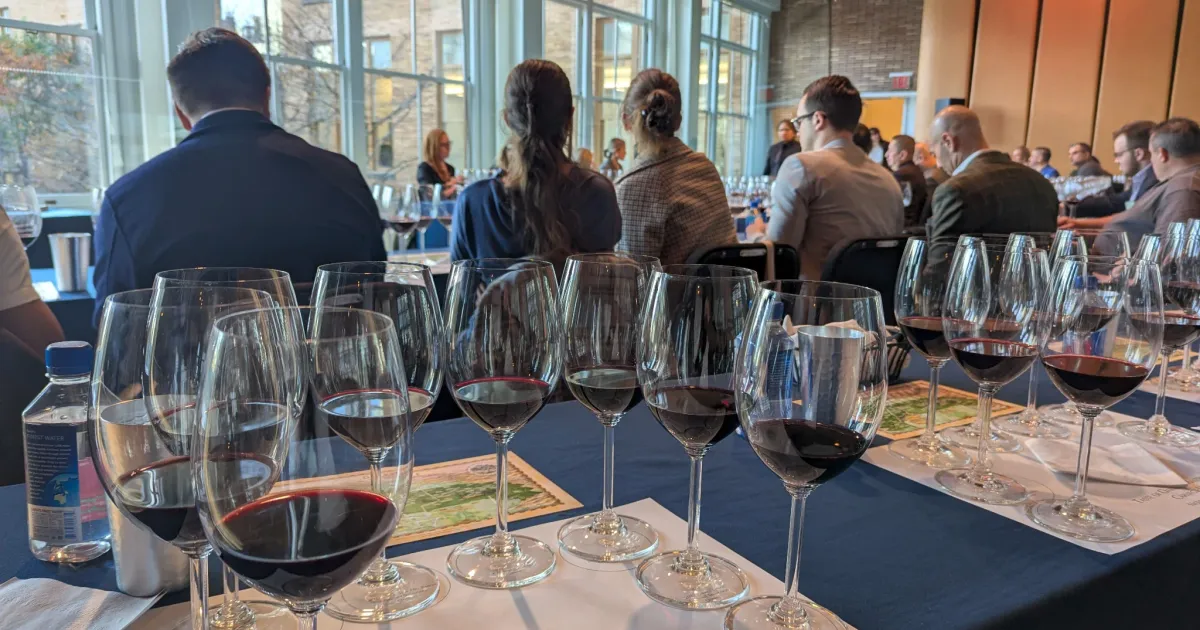
Notes from the November 2026 Oakville Winegrowers masterclass at Carnegie Hall in New York, moderated by Amanda McCrossin.
At the November Oakville Winegrowers masterclass in New York, Amanda McCrossin moderated a discussion with Mary Marr (Harlan Estate), Maya Dalla Valle (Dalla Valle Vineyards), Isabel Stokoe (Vine Hill Ranch), and Megan Zoback (Opus One).
What stood out to me was the emphasis on keeping vineyards healthy and productive for generations, rather than on defining a signature Oakville Cabernet Sauvignon style.
Oakville (in California, USA) became an American Viticultural Area (AVA) in 1993. Across roughly 12 square miles, the growing conditions range from rocky, volcanic-influenced sites in the east to foothills in the west. The panel saw the differences between sites and producers as a strength. Unlike more prescriptive European appellations, Oakville does not impose a single wine style. 1
Farming for longevity
The panel agreed that farming and winemaking cannot really be separated these days. Their methods differ, but soil health and vine longevity were common priorities:
- Harlan Estate: Permanent cover crops, composting, and a long-term focus on soil health
- Opus One: Roughly 60% no-till, with grazing sheep, biodiversity plantings, and moving towards regenerative farming
- Dalla Valle: A transition from organic to biodynamic practices
- Vine Hill Ranch: Vine-by-vine adjustments coordinated by a small vineyard team
The panel also discussed how vines were now kept for longer. They contrasted an earlier tendency to replace vineyards after ~20 years with an ambition now to preserve vines for 80 years or more. Replacing individual dead vines means a single block may now contain plants of many different ages. 2
Opus One’s team also described internal blind tastings favoring wines from no-till plots. They linked less soil disturbance to cooler growing conditions and a slower ripening arc, although those observations should not be generalized to every vineyard.
Blending for texture
Tannin profile and mouthfeel came up repeatedly as priorities in blending, sometimes ahead of aromatic intensity.
Maya Dalla Valle described starting with a broad blend, then removing components and revisiting the result months later.
At Opus One, individual blocks remain separate initially before being assembled into a more harmonious whole.
The common view was that a balanced blend in youth is more likely to age well than a jagged blend that the winemaker hopes will eventually come together.
Some winemakers also discussed co-fermenting as their preferred approach.
Wines tasted
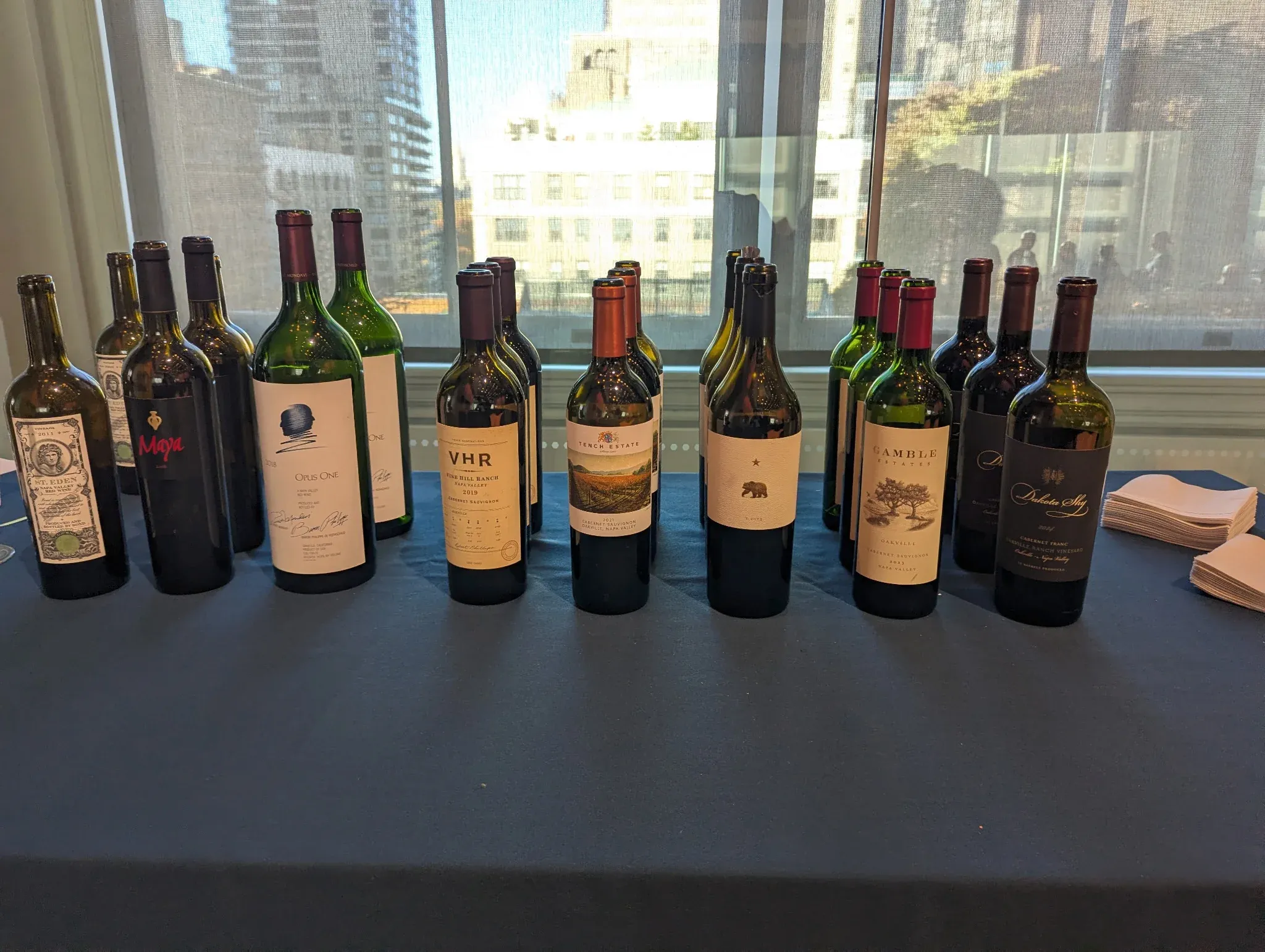
The eight wines gave a useful sense of Oakville’s differences in site, vintage, and approach:
- 2011 BOND St. Eden: Freshness and tension from a cool Napa vintage, which was not well received by critics then but has aged well.
- 2016 Dalla Valle Maya: 67% Cabernet Sauvignon and 33% Cabernet Franc, with the latter contributing aromatic character and structure.
- 2018 Opus One, magnum sized: Violet and rose notes, with soft, resolved tannins.
- 2019 VHR Cabernet Sauvignon: Soft yet fresh, with forest and herbal notes.
- 2021 Tench Estate Cabernet Sauvignon: East Oakville fruit from rocky, volcanic-influenced soils.
- 2023 Patria Oak Hill Ranch Cabernet Sauvignon: A lively, structured wine that prompted a comparison to Nebbiolo.
- 2023 Gamble Estates Cabernet Sauvignon: A discussion of estate-grown fruit and the producer’s repositioning.
- 2024 Dakota Shy Oakville Ranch Cabernet Franc: High-elevation eastern fruit, contrasted with the historic Cabernet Franc plantings at Detert Vineyard in western Oakville.
Sharing problems and knowledge
Oakville Winegrowers is marking its 30th anniversary. Robert Mondavi’s willingness to encourage other producers was cited as part of the region’s collaborative tradition.
The need for that cooperation is growing. Grapevine viruses and diseases do not respect property lines, and wildfire prevention can require neighbors to manage shared forestland.
Harlan and Vine Hill Ranch were described as working together on forest management. Information-sharing that might have been unusual a decade ago is now more accepted.
The four women on the panel also reflected a generational shift in who leads vineyards and winemaking, and how closely those roles now overlap.
What I took away
Oakville’s shared direction seems to be less about making its wines taste alike and more about stewardship: healthier soils, older vines, more deliberate blending, and cooperation on risks that no estate can manage alone. The change from thinking in vintages to thinking in generations was the most memorable part of the discussion.
Notes from the Oakville Winegrowers masterclass at Carnegie Hall, New York. Unless linked otherwise, figures and producer observations reflect material discussed at the event; interpretations are my own.
Footnotes
-
This came up explicitly during Q&A, and the panelists felt that the flexibility of the AVA regulations was a strength and not a weakness ↩
-
There’s an old vine conference, I wonder if some of the makers are part of that? ↩
Questions or corrections?
I welcome thoughtful questions and corrections. Email [email protected].